

A company of the Compart IT-Group
A company of the Compart IT-Group


Combination of multiple transmission technologies
Flexible adaptation to site conditions
Scalability of bandwidth and capacity
Increased resilience through alternative transmission paths

For business-critical applications, the availability of network connections plays a central role. Wireless connections can be specifically deployed as redundant transmission paths, thereby increasing the resilience of existing network structures.
Through redundant architectures, alternative wireless links, or the combination of different technologies, highly available network structures can be realized.
These architectures are particularly suitable for companies with high requirements for network stability and resilience.
Possible measures to increase availability:
redundant wireless links
alternative transmission paths
automatic failover mechanisms
Combination of wireless and landline connections


Connecting new locations often presents companies with challenges – especially when fiber optic connections are unavailable or have long lead times.
Wireless data networks enable fast and flexible site networking. In many cases, new connections can be implemented within a short time without relying on complex civil engineering work.
Typical deployment scenarios:
short-term site connections
temporary infrastructure projects
industrial facilities or production sites
Construction sites or project locations
Expanding existing corporate networks

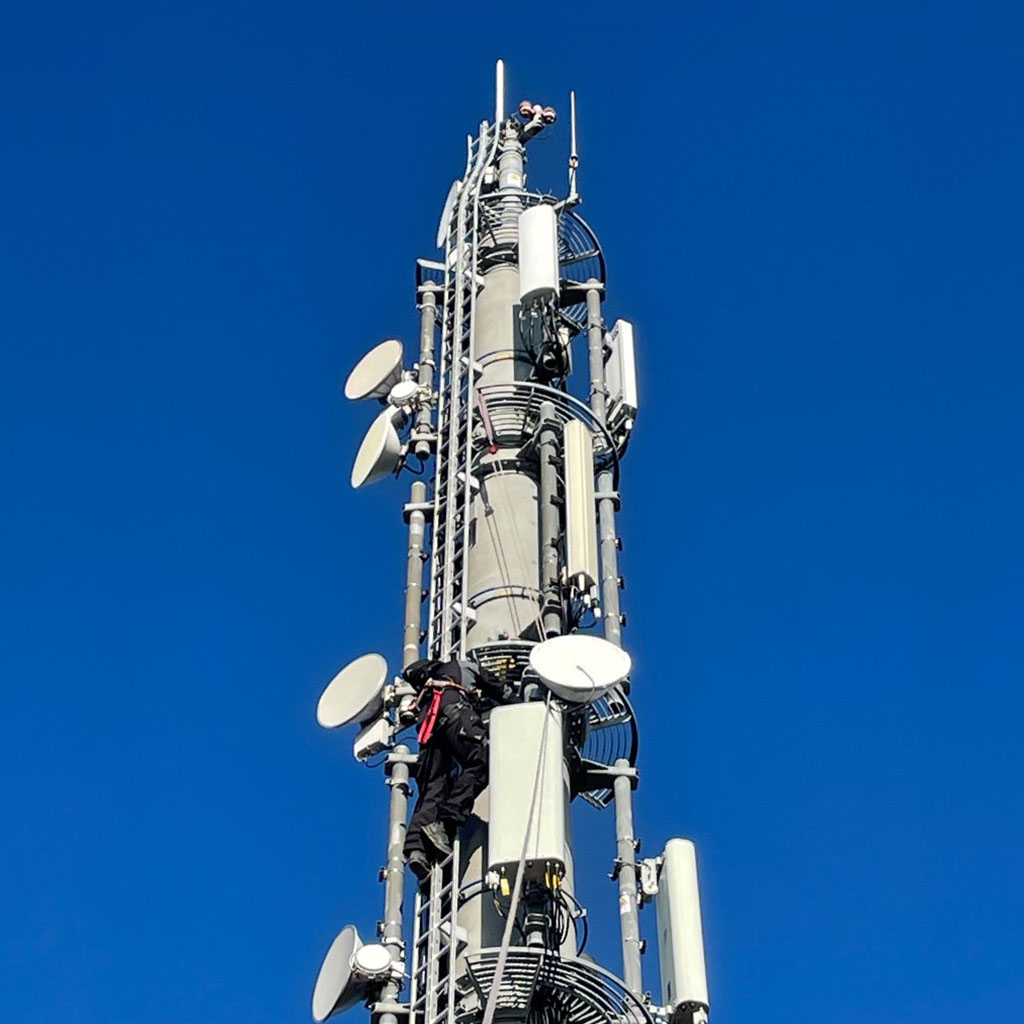
Many companies already have existing network infrastructures such as leased lines, radio hubs, or access layer networks. Wireless data networks can be seamlessly integrated into these existing structures.
This allows existing resources to be utilized further and expanded in a targeted manner without having to completely replace existing systems. Wireless connections are particularly suitable for closing coverage gaps or connecting additional locations.
Possible integrations:
Connecting to existing MPLS or corporate networks
Integrating microwave links into existing backbone structures
Expanding existing access layer networks
Supplementing fiber optic connections with radio links
Wireless data networks are used in many different industries and scenarios. Thanks to their flexibility and rapid availability, wireless data networks are a powerful complement to traditional wired network solutions.
Typical use cases include:
Corporate site networking
Connecting industrial and production sites
Campus and mobile site networks
temporary networks for projects or events
Backup connections for critical infrastructure

[Step 1]
Enter your location and check which connection options are available in just a few seconds.

[Step 2]
Send us your inquiry with the key information regarding your location and infrastructure needs.

[Step 3]
We will review your requirements and prepare a tailored proposal for your connection.